Cobra: The Rough-Edged Display Font That Commands Attention
In the crowded landscape of digital typography, where sleek sans-serifs and elegant serifs dominate the screen, there is a distinct place for fonts that refuse to blend in. Cobra occupies this space with a unique identity, offering a visual language that is simultaneously aggressive and refined. As a display font, it is not designed for body text or long-form reading; rather, it is engineered to stop the scroll, capture the eye, and establish an immediate tone. Its slightly rough texture and bold geometric forms make it incredibly adept across a wide variety of contexts, from high-energy marketing campaigns to edgy editorial layouts.
The appeal of Cobra lies in its ability to bridge the gap between industrial grit and modern sophistication. It does not scream for attention through sheer size alone but rather through character. This article explores the nuanced design philosophy behind the typeface, its practical applications in professional workflows, and why it has become a go-to choice for creators seeking to inject personality into their visual communications.
The Aesthetic DNA of a Rough-Edged Typeface
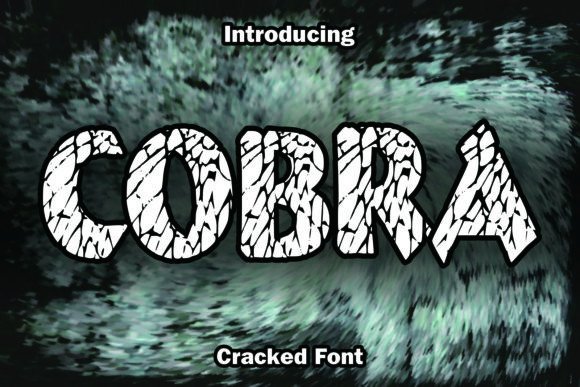
To understand why Cobra works so effectively, one must first examine its construction. Unlike traditional display fonts that often rely on perfect curves and uniform stroke widths, Cobra introduces intentional imperfections. These "rough" edges are not the result of low-resolution rendering or poor digitization; they are deliberate stylistic choices that mimic the texture of weathered metal, stenciled paint, or hand-carved stone.
This textural quality gives the font a tactile presence, even when viewed on a flat digital screen. When a designer selects Cobra, they are choosing a voice that feels authentic and unpolished in a world of over-produced graphics. The geometry remains strong and legible, ensuring that the message is never lost beneath the style. However, the slight irregularities in the terminals and the variable thickness of the strokes add a layer of human interest that sterile, mathematically perfect fonts often lack.
From a typographic perspective, this approach aligns with a broader trend toward "imperfect perfection." Audiences today are increasingly skeptical of overly polished corporate imagery. They respond better to visuals that feel grounded, real, and perhaps a little bit rebellious. Cobra delivers exactly this sentiment. It suggests strength without arrogance and confidence without stiffness. The font's structure allows it to stand alone as a graphic element, functioning almost like a logo within a layout.
Balancing Grit with Readability
A common challenge with rough-edged display fonts is maintaining legibility at smaller sizes or in complex environments. Cobra manages this balance by keeping its x-height generous and its counters open. Even with the added texture, the letterforms remain distinct. The 'a', 'e', and 'o' characters do not collapse under their own weight, and the ascenders and descenders provide enough vertical rhythm to guide the eye naturally across a headline.
This structural integrity means that while the font looks rugged, it does not sacrifice clarity. Designers can push the font to its limits—using it in tight kerning scenarios or against busy backgrounds—without fearing that the message will become illegible. This versatility is what separates a gimmicky novelty font from a truly useful tool like Cobra.
Strategic Applications Across Industries
The true test of any typeface is how well it performs in real-world scenarios. Cobra has proven its worth across a diverse spectrum of industries, demonstrating that its rough aesthetic is not limited to niche subcultures. Its adaptability allows it to serve professionals, business owners, and hobbyists alike, provided it is used with intention.
- Brand Identity and Logos: For startups and established brands looking to pivot toward a more dynamic image, Cobra offers an instant upgrade. It works exceptionally well for companies in the automotive, fitness, gaming, and outdoor sectors. The font conveys power and durability, traits that resonate deeply with these target demographics. A gym brand using Cobra immediately signals intensity, while a tech startup might use it to suggest innovation that breaks the mold.
- Editorial and Magazine Design: In print and digital publishing, headlines need to pop. Cobra provides the necessary contrast to pull readers into an article. It is particularly effective in lifestyle magazines, music publications, and cultural critiques where the tone is often provocative or unconventional. The font adds a layer of editorial voice, suggesting that the content within is fresh and unapologetic.
- Event Marketing and Ticketing: Concert posters, festival flyers, and event tickets benefit immensely from the high-impact nature of this typeface. The rough edges evoke the energy of live performance and the raw atmosphere of underground venues. When paired with vibrant colors and dynamic photography, Cobra creates a sense of urgency and excitement that drives ticket sales.
- Packaging Design: Product packaging is a battlefield for consumer attention. Whether it is a craft beer label, a sneaker box, or a gourmet food container, Cobra helps the product stand out on the shelf. The texture implies craftsmanship and quality, suggesting that the contents are something special, not mass-produced in a factory devoid of soul.
These examples illustrate that Cobra is not just a decorative element; it is a strategic asset. By aligning the font's inherent characteristics with the brand's values, designers can create cohesive and compelling narratives that resonate with their intended audience.
Workflow Integration and Technical Considerations
For professionals integrating Cobra into their design workflows, there are specific technical considerations to keep in mind. Because the font relies on texture and edge variation, the output medium plays a crucial role in how the final design is perceived.
Screen vs. Print Dynamics
On digital screens, the anti-aliasing properties of modern operating systems can sometimes soften the rough edges of Cobra. To maintain the intended look, designers should ensure that the font is rendered at sufficient resolution. Using vector formats for web assets, such as SVG or Webfonts with proper hinting, ensures that the texture remains crisp across different devices. In print, the font shines. High-quality offset printing or large-format vinyl cutting captures every nuance of the rough strokes, making the physical material feel substantial and premium.
Pairing Strategies
One of the most critical aspects of using a strong display font like Cobra is pairing it correctly with secondary typefaces. Because Cobra is so dominant, it demands a partner that recedes gracefully. Clean, neutral sans-serifs or simple, readable serifs work best. The goal is to let Cobra carry the emotional weight of the headline while the supporting text handles the informational load without competing for attention.
Designers should avoid pairing Cobra with other highly stylized or textured fonts. Doing so creates visual noise and confuses the viewer. Instead, treat the font as the anchor of the design hierarchy. Use it sparingly for titles, slogans, and key calls to action. When used in moderation, its impact is maximized; when overused, it risks becoming fatiguing.
The Psychology of Texture in Typography
Beyond the visual mechanics, there is a psychological component to why Cobra resonates so effectively. Human beings have an innate response to texture. We associate smooth surfaces with cleanliness and order, but we associate roughness with authenticity, history, and resilience. In a digital age where everything is pixel-perfect and frictionless, the introduction of roughness triggers a subconscious appreciation for the tangible and the real.
When a consumer sees Cobra, they are not just reading words; they are feeling a texture. This multisensory experience makes the communication more memorable. It breaks the pattern of the typical user journey, forcing a moment of pause and engagement. This is particularly valuable in marketing contexts where attention spans are short and competition is fierce.
Furthermore, the font's slightly aggressive posture can be interpreted as confidence. It does not ask for permission to be seen; it declares its presence. For businesses aiming to project authority and leadership, this subtle psychological cue can be a powerful differentiator. It signals that the brand is bold enough to take risks and stand out from the crowd.
Navigating Trends and Longevity
Typography trends are notoriously fickle. What is popular today may be considered dated tomorrow. However, fonts like Cobra possess qualities that suggest longevity. While specific stylistic flourishes may come and go, the fundamental desire for authenticity and character in design is enduring. The "rough" aesthetic taps into a timeless appreciation for the handmade and the organic.
As design trends continue to shift away from minimalism and toward maximalism and neo-brutalism, Cobra is well-positioned to remain relevant. It fits seamlessly into the emerging visual languages that prioritize expression over restraint. Yet, because it retains a level of geometric discipline, it avoids the pitfalls of becoming purely chaotic or unreadable.
For educators and researchers studying the evolution of digital typography, Cobra serves as an excellent case study. It demonstrates how a typeface can evolve to meet the changing needs of the market without losing its core identity. It shows that functionality and artistry are not mutually exclusive but can, in fact, reinforce one another.
Future-Proofing Your Brand Voice
For business owners and creative directors, investing in a versatile display font like Cobra is a strategy for future-proofing brand assets. By choosing a font that balances trendiness with classic structural principles, you ensure that your visual identity remains effective for years to come. It allows for flexibility in campaign execution while maintaining a consistent brand voice.
Whether you are launching a new product line, rebranding an existing company, or simply looking to refresh your website's header, Cobra offers a solution that is both immediate and lasting. Its ability to adapt to various contexts while retaining its unique character makes it an invaluable tool in the modern designer's toolkit.
Ultimately, the success of Cobra lies in its ability to communicate more than just information. It communicates attitude, energy, and a distinct point of view. In a world saturated with content, having a voice that cuts through the noise is not just an advantage—it is a necessity. By embracing the rough edges and bold spirit of this unique display font, creators and professionals can elevate their work and connect with audiences on a deeper, more visceral level.