Monroat: Redefining Visual Identity in a Digital-First Era
In the rapidly evolving landscape of digital communication, typography has transcended its traditional role as mere text delivery. It has become a primary vehicle for brand personality, emotional resonance, and user engagement. Amidst a sea of generic sans-serifs and overused script fonts, Monroat emerges as a distinct solution for professionals seeking to cut through the noise. As a modern and stylish display font, Monroat is not just a typeface; it is a strategic asset for creators, entrepreneurs, and marketers aiming to establish a memorable visual footprint.
The shift towards bold, expressive typography reflects a broader industry trend where brands are moving away from minimalism's starkness toward "maximalist" clarity—designs that are clean yet possess significant character. This article explores why Monroat is capturing attention, how it aligns with current consumer expectations, and practical ways to integrate it into your creative workflow.
The Essence of Monroat: More Than Just Aesthetics
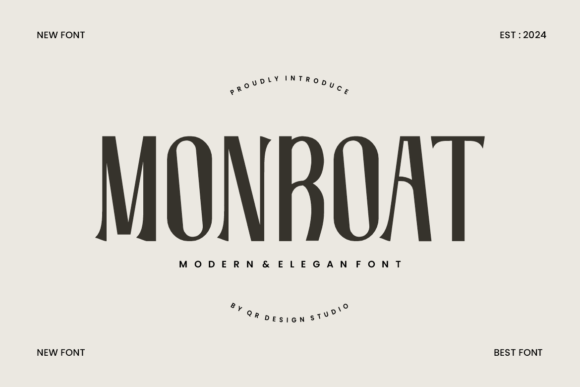
To understand the appeal of Monroat, one must first appreciate the specific niche it occupies. Display fonts are designed primarily for headlines, logos, and short-form messaging where impact is paramount. Unlike body fonts that prioritize legibility at small sizes, display fonts like Monroat are engineered to command attention at larger scales. Its geometric precision combined with subtle stylistic flourishes creates a unique visual rhythm that feels both contemporary and timeless.
What sets Monroat apart is its versatility within the display category. It balances the structural integrity required for professional applications with the artistic flair needed for creative projects. Whether used in a sleek tech startup logo or a vibrant lifestyle campaign, Monroat maintains its identity without feeling out of place. This adaptability is crucial in today's fragmented media environment, where a single brand asset must perform across social media thumbnails, website headers, and print advertisements.
Aligning with Contemporary Design Trends
The rise of Monroat coincides with several significant shifts in the design and technology sectors. We are witnessing a departure from the rigid, corporate aesthetics of the early 2000s toward a more human-centric, emotive design language. Consumers today expect brands to have a voice, and typography is often the loudest part of that conversation.
- The Return of Character: In an era dominated by algorithmic content feeds, static images need to stop the scroll. Monroat provides the necessary visual weight to halt user attention instantly.
- Digital-First Optimization: As screens continue to dominate our consumption habits, fonts that render crisply on high-resolution displays while retaining their style are in high demand. Monroat is optimized for these environments, ensuring that the intended message lands clearly regardless of the device.
- Brand Differentiation: With millions of new businesses launching annually, standing out is no longer optional. Using a distinctive typeface like Monroat allows brands to carve out a unique space in the market, signaling confidence and creativity.
Why Professionals Are Turning to Monroat
The adoption of Monroat among freelancers, agencies, and in-house design teams is driven by a pragmatic need for efficiency and quality. The modern creative workflow is fast-paced, requiring assets that deliver high impact with minimal friction. Monroat addresses this by offering a robust set of glyphs and ligatures that allow designers to craft compelling layouts quickly.
Furthermore, there is a growing appreciation for typography that bridges the gap between luxury and accessibility. Monroat achieves a sophisticated look that does not feel inaccessible or overly pretentious. This balance is particularly valuable for entrepreneurs and marketers who need to project authority while remaining approachable to their target audience.
Changing Expectations in Consumer Engagement
Consumer preferences have shifted dramatically in recent years. Audiences are increasingly savvy about design trends and can instantly recognize when a brand is using outdated or generic visuals. There is a heightened expectation for authenticity and polish. When a brand utilizes a carefully selected font like Monroat, it signals to the consumer that attention has been paid to detail.
This psychological cue is powerful. In the context of e-commerce and digital services, trust is built on perception. A well-designed headline in Monroat can elevate a product description from a simple list of features to a compelling narrative. It suggests that the company behind the product values quality, extending that perception to the goods or services being offered.
Practical Applications Across Industries
The utility of Monroat extends beyond theoretical design principles. It finds practical application across a wide spectrum of industries, each leveraging its unique characteristics to solve specific communication challenges.
Marketing and Advertising Campaigns
For marketers, the headline is the most critical element of any ad. It is the hook that determines whether the rest of the message is consumed. Monroat’s strong visual presence makes it an ideal choice for campaign titles, call-to-action buttons, and promotional banners. Its ability to convey urgency and excitement without resorting to aggressive styling makes it suitable for both B2B and B2C contexts.
Consider a launch campaign for a new software tool. A generic font might fail to capture the innovation inherent in the product. By contrast, using Monroat for the main tagline immediately communicates a sense of modernity and forward-thinking, aligning the visual identity with the product's value proposition.
Branding and Identity Systems
Entrepreneurs building new ventures often struggle with establishing a cohesive brand identity. Typography serves as the backbone of this system. Monroat offers a solid foundation for logos and brand marks. Its distinct letterforms ensure that the brand name remains recognizable even when scaled down for favicons or app icons.
Moreover, the font's versatility allows for consistent application across various touchpoints. From business cards to email signatures, Monroat ensures that the brand voice remains uniform, reinforcing recognition and recall over time.
Creative Projects and Editorial Design
For graphic designers and illustrators, Monroat opens up new avenues for experimental layouts. Its structure supports dynamic compositions, allowing for creative kerning and spacing adjustments that enhance the overall aesthetic. Whether designing album covers, event posters, or magazine spreads, Monroat adds a layer of sophistication that elevates the entire piece.
- Event Promotion: Use Monroat for festival or conference posters to create a sense of energy and exclusivity.
- Packaging Design: Apply the font to product labels to stand out on crowded retail shelves.
- Web Headers: Implement Monroat in website navigation and hero sections to guide user attention effectively.
Integrating Monroat into Your Workflow
Adopting a new typeface requires more than just downloading a file; it involves understanding how to wield it effectively. To get the most out of Monroat, consider the following best practices:
Pairing Strategies: While Monroat is powerful on its own, it works exceptionally well when paired with a neutral, highly readable sans-serif or serif font for body text. This combination ensures that the display font captures attention without compromising the readability of longer content blocks.
Whitespace Management: Because Monroat is a display font with significant character, it requires ample whitespace to breathe. Avoid cramming text together. Let the letters and words have room to expand, which enhances the perceived elegance and modernity of the design.
Contextual Relevance: Always evaluate the context in which the font will be used. While Monroat is versatile, it may not be suitable for every scenario. Reserve it for moments where you need to make a statement, such as headlines, logos, or key marketing messages.
The Future of Typography and Brand Expression
As we look toward the future, the role of typography in digital experiences will only grow more significant. With the advent of variable fonts and adaptive design systems, typefaces like Monroat are poised to evolve further, offering even greater flexibility for designers. The trend is moving toward personalized, dynamic typography that responds to user interaction and environmental context.
However, the core principle remains unchanged: good typography builds connection. In a world saturated with information, the ability to communicate clearly and beautifully is a competitive advantage. Monroat represents a step forward in this journey, offering a tool that empowers creators to express their vision with clarity and style.
Whether you are a seasoned designer refining a brand identity or an entrepreneur launching your first venture, the choice of typeface matters. It is a decision that influences how your message is received and remembered. By incorporating Monroat into your creative projects, you are choosing a path of distinction and intentionality.
The digital landscape is constantly shifting, but the power of great design remains constant. Embrace the tools that allow you to tell your story effectively. Add Monroat to your toolkit and enjoy the results—a sharper, more engaging, and undeniably modern visual presence that resonates with your audience.
As the boundaries between art and commerce continue to blur, the demand for high-quality, expressive typography will only increase. Monroat stands ready to meet this demand, providing a reliable and stylish solution for the challenges of modern communication. For those willing to invest in the details of their visual identity, the payoff is a stronger, more memorable brand that stands the test of time.