Redefining Visual Language with Vibe Vision: A New Era for Experimental Typography
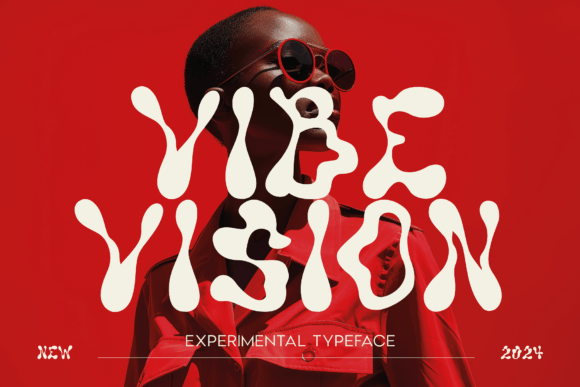
In the rapidly evolving landscape of digital design, the lines between functional communication and abstract art are increasingly blurring. For years, the industry has relied on a stable foundation of legible, grid-based typefaces that prioritize clarity above all else. However, a shift is occurring—one where the emotional resonance of a font matters just as much as its readability. Enter Vibe Vision, an experimental font that breaks the mold of conventional type design and ventures boldly into the realm of abstract artistry. This is not merely a new addition to a designer's library; it is a declaration of intent for a generation of creatives ready to defy standards.
As we navigate an era defined by visual saturation, brands and individuals alike are searching for ways to cut through the noise. Vibe Vision answers this call by offering a vibrant collection of characters that dares to challenge the status quo. It encourages designers to explore a world where form meets freedom, transforming text from a passive vessel of information into an active participant in the visual narrative.
The Philosophy Behind Vibe Vision
To understand the impact of Vibe Vision, one must first look at what makes it distinct. Unlike traditional typefaces that adhere strictly to optical consistency and uniform stroke weights, Vibe Vision embraces irregularity. Each character is crafted with a sense of fluid motion and organic unpredictability, mimicking the chaotic yet harmonious nature of modern life. It is a bold choice for creatives looking to make a statement, ideal for artistic branding, edgy editorial work, and any project that desires to stand out.
This typeface represents a departure from the "clean and minimal" aesthetic that dominated the tech and startup sectors for over a decade. While minimalism served its purpose in establishing order, the current cultural zeitgeist craves personality, texture, and raw expression. Vibe Vision fits perfectly into this broader trend of "maximalist minimalism," where simplicity in concept is paired with complexity in execution. It allows the typography itself to become the hero of the design, rather than just a supporting element.
Why Designers Are Paying Attention
The attention surrounding Vibe Vision is not accidental; it is a direct response to changing consumer expectations. Today's audience, particularly younger demographics like Gen Z and Millennials, possesses a high level of media literacy. They can instantly spot generic templates and stock imagery. Consequently, they gravitate toward brands that demonstrate authenticity and a willingness to take risks.
Creatives are paying attention because Vibe Vision provides a unique tool to signal this authenticity. When a logo or headline utilizes this experimental font, it immediately communicates that the brand behind it is forward-thinking, unafraid of controversy, and deeply attuned to contemporary culture. It serves as a visual shorthand for innovation. In a market where differentiation is currency, a distinctive typeface can be the difference between being noticed and being ignored.
Integrating Vibe Vision into Modern Workflows
For professionals, creators, entrepreneurs, and freelancers, integrating a font as dynamic as Vibe Vision requires a shift in workflow and mindset. It is as versatile as it is distinctive, offering endless possibilities for animation, logo design, and modern art installations. However, versatility does not mean it should be used indiscriminately. The key lies in understanding context.
Artistic Branding and Identity
In the realm of branding, Vibe Vision excels when used sparingly to create focal points. Imagine a music festival poster where the event name is rendered in this fluid style against a stark, solid background. The contrast creates immediate visual tension and excitement. For lifestyle brands focusing on wellness, creativity, or streetwear, this typeface can anchor an identity system that feels human and approachable, breaking away from the corporate rigidity often associated with standard sans-serifs.
Edgy Editorial and Publishing
The publishing industry is also seeing a resurgence of typographic experimentation. Magazines and digital publications are using Vibe Vision for pull quotes, chapter headers, and feature titles. This usage transforms the reading experience, turning static pages into dynamic journeys. By breaking the grid, editors can guide the reader's eye more intuitively, creating a rhythm that mirrors the content's tone.
Animation and Digital Motion
Perhaps the most exciting application of Vibe Vision lies in motion graphics. Because the characters are designed with inherent movement and irregular edges, they animate naturally. A simple kinetic typography sequence using this font can feel alive, pulsing, and reactive. This is particularly relevant for social media content, where short-form video dominates. Brands using Vibe Vision in their Instagram Reels or TikTok intros can capture attention within the crucial first three seconds, leveraging the font's kinetic energy to stop the scroll.
Aligning with Broader Industry Trends
The rise of Vibe Vision coincides with several significant developments in technology and design. As web technologies like WebGL and CSS animations become more accessible, the limitations of static text are fading. Designers are no longer confined to flat screens; they are building immersive environments. In these spaces, typography needs to behave less like ink on paper and more like a living entity. Vibe Vision was born for this environment.
Furthermore, the intersection of AI and generative design is pushing boundaries in unexpected ways. While AI tools often strive for perfection and symmetry, there is a growing counter-movement valuing the "imperfect" and the "human-made." Vibe Vision sits comfortably in this niche. It offers the curated chaos that algorithms struggle to replicate authentically. For entrepreneurs building brands in the Web3 space, NFTs, or virtual reality, this font offers a bridge between the digital and the tactile, grounding futuristic concepts in something that feels emotionally resonant.
- Shift from Utility to Emotion: Consumers now expect brands to evoke feelings, not just convey facts. Vibe Vision prioritizes emotional impact.
- The Rise of Micro-Trends: In fast-moving digital cultures, trends cycle quickly. A flexible, expressive font allows brands to pivot their visual language without losing their core identity.
- Accessibility Through Distinctiveness: While abstract fonts can pose readability challenges, when used correctly as display type, they enhance accessibility by reducing cognitive load through strong visual cues.
Practical Considerations for Implementation
While Vibe Vision offers immense creative potential, it requires strategic implementation. It is not a drop-in replacement for body copy. Its strength lies in its ability to command attention, which means it should be reserved for headlines, logos, and key visual elements. Pairing it with a neutral, highly legible sans-serif for body text ensures that the message remains clear while the personality shines through.
Designers should also consider color and texture. The abstract nature of the characters interacts uniquely with gradients, grain, and transparency. Experimenting with layering Vibe Vision over photographic backgrounds or blending it with 3D elements can unlock new dimensions of depth. For freelancers and agencies, mastering these techniques can elevate a portfolio, demonstrating a sophisticated understanding of contemporary design principles.
The Future of Type Design
Looking ahead, the success of Vibe Vision suggests a future where typography is less about rigid rules and more about fluid expression. As the digital frontier expands, so too will the tools available to shape our visual language. We are moving toward a time where every piece of text can be customized, animated, and tailored to the specific mood of the moment.
This typeface is a harbinger of that change. It invites us to reconsider what text can be. Is it just a carrier of meaning? Or can it be an experience? Vibe Vision argues that it can be both. By embracing the unconventional, designers are not just making things look different; they are fundamentally altering how we interact with information.
For the professional seeking to stay ahead of the curve, exploring Vibe Vision is more than a stylistic choice—it is a strategic move. It signals an alignment with a culture that values creativity, risk, and individuality. In a world increasingly homogenized by algorithms and templates, choosing a font that defies the standard is perhaps the most powerful statement a creator can make.
Whether you are crafting a logo for a disruptive startup, designing a campaign for a fashion label, or curating an immersive art installation, Vibe Vision offers the canvas you need to paint your vision. It is a reminder that in the end, design is about connection, and sometimes, the most profound connections happen when we dare to break the rules.