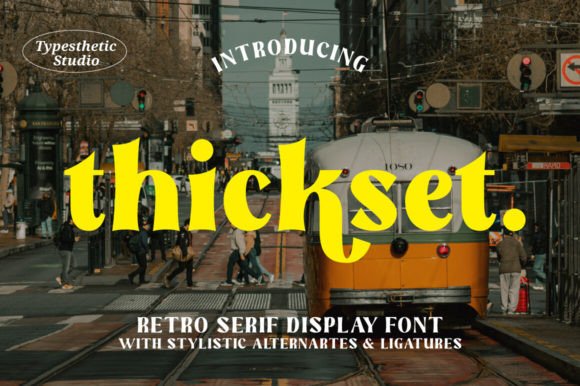
Thickset: A Bold Retro Serif for Modern Design Projects
In the crowded landscape of digital typography, finding a typeface that balances nostalgia with contemporary utility is often a challenge. Designers frequently struggle to find fonts that carry enough weight to command attention without sacrificing readability or aesthetic harmony. This is where Thickset emerges as a powerful solution. Thickset is a stunning display retro serif font with a stylish and modern look, offering a unique blend of vintage charm and current design sensibilities. Whether you are branding a new product, designing a poster, or creating digital assets, understanding how to leverage this typeface can significantly elevate your creative output.
Understanding the Character of Thickset
To utilize any typeface effectively, one must first understand its inherent personality. Thickset is not merely a decorative font; it is a statement piece rooted in the mid-century typographic tradition while being refined for today's visual standards. The "retro" aspect refers to its structural foundation, which mimics the heavy ink lines and bold strokes common in 1950s and 60s advertising. However, the "modern" element comes from its precise geometry and the inclusion of stylish alternates that prevent the text from feeling dated or static.
The defining characteristic of Thickset is its robust stroke weight. Unlike thin, airy serifs that require high-resolution environments to render clearly, Thickset maintains its integrity across various media. Its serifs are distinct but integrated smoothly into the main body of the letters, creating a cohesive block of text that feels solid and reliable. This makes it an excellent choice for headlines and titles where impact is the primary goal. The font family also includes alternate characters, allowing designers to tweak specific glyphs to create unique ligatures or stylistic variations, ensuring that no two projects using Thickset look exactly alike.
Addressing Common Design Challenges
Creative professionals often face specific hurdles when selecting typography for their projects. One common issue is the "generic" look. Many free or standard fonts have been overused to the point where they fail to communicate a brand's unique identity. Another challenge is legibility versus style. Display fonts often prioritize aesthetics so heavily that they become difficult to read at smaller sizes or from a distance. Furthermore, designers frequently need a font that works well in both print and digital formats, yet many retro-style fonts lack the optimization required for screen rendering.
Thickset addresses these pain points directly. By offering a distinct visual voice, it helps brands stand out immediately. The heavy weight ensures that even when used in large formats like billboards or social media banners, the message remains clear and impactful. Additionally, the modern refinements in its vector paths ensure that it scales beautifully on mobile devices and high-DPI screens. The availability of alternates solves the problem of repetition, giving designers the flexibility to customize the look for different contexts without needing to switch to a completely different typeface family.
Practical Applications for Creative Projects
The versatility of Thickset allows it to be applied across a wide range of industries and project types. Its bold nature makes it particularly effective for branding in sectors that value strength, heritage, and confidence. Consider the following practical applications:
- Brand Identity and Logos: For businesses looking to establish a strong presence, Thickset serves as an excellent logotype. Its thick strokes convey stability and authority, making it suitable for construction firms, automotive brands, or artisanal food companies that want to emphasize quality and tradition.
- Packaging Design: In the retail world, packaging needs to grab attention on a crowded shelf. Thickset works exceptionally well on labels for craft beers, hot sauces, or gourmet snacks. The retro vibe suggests a "handcrafted" or "premium" quality, while the modern execution keeps it relevant to current consumer trends.
- Editorial Headlines: Magazines and online publications can use Thickset for feature stories or section headers. It adds a layer of sophistication and editorial flair that sans-serif fonts sometimes lack. The alternates allow editors to play with initial caps or drop caps to create a custom magazine layout feel.
- Event Marketing: Concert posters, festival flyers, and event invitations benefit from the energetic and nostalgic feel of Thickset. It evokes a sense of excitement and cultural significance, drawing audiences in before they even read the details.
Strategies for Implementation
While Thickset is powerful, it requires thoughtful implementation to achieve the best results. Because it is a display font, it should generally be reserved for short bursts of text such as headlines, titles, or call-to-action buttons. Using it for long paragraphs of body copy can lead to visual fatigue and reduced readability due to the density of the letterforms.
A key strategy for maximizing the impact of Thickset is pairing it with a complementary typeface. Since Thickset is heavy and detailed, it pairs beautifully with a clean, neutral sans-serif or a simple geometric font for body text. This contrast creates a hierarchy that guides the reader's eye naturally from the bold headline to the supporting information. For example, using Thickset for a "New Collection" header followed by a light sans-serif for the product description creates a balanced and professional look.
Furthermore, designers should take full advantage of the stylish alternates included in the font file. These characters allow for subtle customization. You might swap a standard 'g' for a double-story variant to add a touch of elegance, or use a specific ligature to connect words in a logo. Experimenting with tracking (letter-spacing) is also crucial; slightly increasing the spacing between letters can make Thickset appear more breathable and luxurious, while tightening it up can create a dense, blocky effect ideal for streetwear branding.
Tailoring Thickset to Different User Needs
Different users will approach Thickset based on their specific goals and technical proficiency. For the freelance graphic designer, Thickset is a tool for differentiation. They can use the alternates to offer clients unique options within a single font purchase, adding value to their proposals. The ability to mix and match styles allows them to iterate quickly during the brainstorming phase.
For the marketing manager working with limited resources, Thickset offers a cost-effective way to achieve a premium look. Instead of commissioning a custom logo, they can utilize the font's built-in features to create a distinctive brand mark that resonates with their target audience. The font's readability ensures that marketing campaigns remain accessible to a broad demographic.
Meanwhile, the web developer focusing on user experience will appreciate the font's rendering capabilities. When implemented via web fonts, Thickset loads efficiently and maintains its crisp edges across different browsers and operating systems. This ensures that the visual design intended by the creative team is faithfully reproduced for every visitor, enhancing the overall user journey.
Conclusion
Thickset represents a significant opportunity for creatives seeking to merge the warmth of the past with the precision of the present. It is more than just a font; it is a strategic asset that can solve problems related to brand visibility, aesthetic consistency, and visual engagement. By understanding its strengths and applying it thoughtfully within your projects, you can create designs that are not only visually striking but also functionally effective. Whether you are launching a new product line or refreshing an existing brand, adding Thickset to your toolkit allows you to enjoy the results of a design that stands the test of time.