Granite: A Vintage Display Font for Modern Sophistication
In the crowded landscape of digital typography, finding a font that balances historical reverence with contemporary utility is often a challenge. Granite emerges as a compelling solution for designers seeking to inject vintage charm and retro elegance into their work without sacrificing legibility or technical reliability. Unlike generic serif fonts that rely on clichéd ornamentation, Granite offers a meticulously crafted set of letterforms that evoke nostalgia while maintaining a refined, sophisticated edge. This evaluation explores the practical application, technical specifications, and aesthetic value of Granite for professionals ranging from branding consultants to editorial publishers.
The Aesthetic Philosophy of Granite
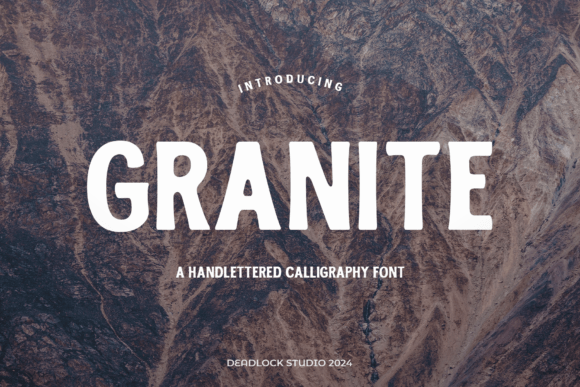
At its core, Granite is designed to bridge the gap between classic print traditions and modern screen-based media. The font's defining characteristic lies in its timeless serifs, which are not merely decorative but structural, providing a sense of stability and authority to headlines and titles. When evaluating the visual weight of Granite, one notices an immediate departure from the overly distressed or "grunge" styles often associated with retro themes. Instead, it leans towards understated luxury.
Each character in the Granite family possesses a unique personality, a result of careful attention to stroke modulation and counter spacing. This individuality prevents the text from feeling mechanical or repetitive, a common pitfall in lower-quality typefaces. For instance, the contrast between thick and thin strokes mimics the ink flow of traditional letterpress printing, adding texture and depth. However, the designer has subtly adjusted these contrasts to ensure they remain crisp on high-resolution displays, making Granite versatile for both print collateral and web headers.
Technical Specifications and Compatibility
A font's aesthetic appeal means little if it fails to function seamlessly within a professional workflow. Granite addresses this by offering robust file formats, including OpenType (OTF), TrueType (TTF), and Web Open Font Format (WOFF). This multi-format availability ensures compatibility across a wide spectrum of design applications, from Adobe Creative Cloud suites to CSS-driven web projects.
- OTF: Ideal for desktop publishing and complex layout software where advanced typographic features are required.
- TTF: Provides broad system compatibility for older operating systems or specific legacy applications.
- WOFF: Optimized for web performance, ensuring fast load times and rendering consistency across browsers.
Beyond standard formats, Granite utilizes PUA (Private Use Area) encoding. This technical feature is significant for power users who require access to alternate glyphs and ligatures that standard Unicode does not cover. By unlocking these hidden characters, designers can customize the look of their text, swapping standard letters for more ornate variants or inserting stylistic ligatures that enhance the flow of a headline. This flexibility transforms Granite from a static asset into a dynamic tool for creative expression.
Practical Applications in Design
The versatility of Granite makes it suitable for a variety of use cases, though it shines brightest in specific contexts. Its display nature suggests it is best reserved for headlines, logos, and short-form copy rather than long paragraphs of body text. In branding, Granite adds an immediate layer of credibility and heritage. A boutique winery, a high-end fashion label, or a heritage architecture firm could leverage Granite to communicate quality and tradition.
Editorial and Publishing
For editors and publishers, Granite serves as an excellent choice for magazine covers, chapter headings, or pull quotes. The font's strong vertical axis and distinct serifs help break up dense layouts, guiding the reader's eye through the content. When paired with a neutral sans-serif for body copy, Granite creates a harmonious hierarchy that feels both modern and established.
Digital and Web Presence
In the realm of web design, the WOFF format allows Granite to be integrated directly into site stylesheets. It performs well at larger sizes, such as hero section titles or navigation menus. The PUA encoding allows for subtle animations or hover effects where alternate glyphs can be revealed, adding an interactive layer to the user experience without compromising loading speeds.
Evaluating Usability and Workflow Integration
From a usability standpoint, Granite is straightforward to implement. The inclusion of multiple file formats removes the friction often encountered when switching between different design environments. For freelancers and small agencies working across diverse client platforms, this reduces the time spent troubleshooting font compatibility issues.
The PUA encoding requires a slight learning curve for those unfamiliar with glyph palettes, but the payoff is significant. Once mastered, it allows for rapid iteration on design concepts. A designer can quickly toggle between standard and alternate characters to find the perfect balance for a logo lockup. However, it is important to note that PUA glyphs may not render correctly in all environments, particularly simple word processors or basic email clients. Therefore, for final deliverables intended for non-design audiences, it is advisable to outline the text or export as an image if custom glyphs are critical.
Strengths and Limitations
Granite's primary strength lies in its ability to convey sophistication without appearing dated. It captures the essence of mid-century typography while adhering to modern optical standards. The consistency of the stroke weights and the clarity of the counters ensure that the font remains readable even at moderate sizes. Furthermore, the extensive range of alternates provided via PUA encoding offers a level of customization that many premium fonts lack.
However, there are limitations to consider. As a display font, Granite is not optimized for extended reading. Using it for body text in a blog post or a white paper would likely result in visual fatigue due to the intricate details and varying stroke widths. Additionally, while the PUA features are powerful, they require a compatible editor to access fully. Users relying solely on basic text tools may miss out on the full potential of the font.
Who Should Use Granite?
Granite is an ideal resource for professionals who prioritize brand identity and visual storytelling. Entrepreneurs launching lifestyle brands, marketers crafting campaigns with a heritage angle, and creatives working on packaging design will find particular value in this typeface. It is also well-suited for educators and publishers looking to add a touch of academic gravitas to their materials.
Small business owners should consider Granite if their target audience values tradition, quality, and craftsmanship. The font speaks a language of reliability and refinement, making it effective for industries such as hospitality, legal services, and artisanal goods. Conversely, startups in the tech sector aiming for a purely futuristic or minimalist aesthetic might find Granite too ornate for their needs.
Long-Term Value and Relevance
Typography trends cycle frequently, but fonts rooted in classical proportions tend to endure. Granite's adherence to timeless serif structures suggests it will remain relevant well beyond current design fads. Its ability to adapt to both print and digital mediums ensures longevity in a creator's toolkit. By investing in a font like Granite, designers secure an asset that can evolve with their projects, offering consistent results over years of use.
Ultimately, Granite represents a thoughtful approach to type design. It respects the history of typography while embracing the technical demands of the modern era. For those willing to explore its features and apply it judiciously, Granite offers a reliable path to creating designs that are both visually striking and professionally polished. Whether used to define a brand voice or elevate a publication, it stands as a testament to the enduring power of well-crafted letterforms.