Decom: A Modern Typography Solution for Bold Visual Impact
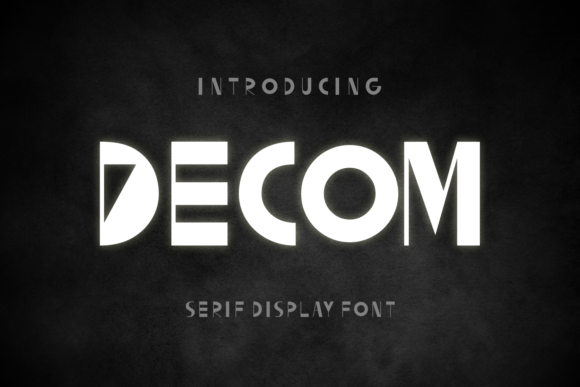
In the crowded digital landscape, attention is the most valuable currency. Whether you are scrolling through a social media feed, walking past a storefront, or reviewing a business proposal, your eyes instinctively gravitate toward clarity and style. This is where typography becomes more than just text; it becomes a strategic tool for communication. Enter Decom, a cool new font with thin and bold lines that make letters stand out in ways traditional typefaces often cannot. As design trends shift away from the uniformity of the past decade, Decom represents a move toward dynamic contrast and visual sophistication.
For professionals ranging from graphic designers to marketing managers, finding a typeface that balances readability with personality is a constant challenge. Decom addresses this by offering a modern and stylish aesthetic that ensures your words pop in designs like posters and logos. Its sleek look adds a touch of sophistication to any project, making it a versatile asset for those looking to elevate their brand identity without sacrificing legibility.
The Evolution of Contrast in Digital Typography
Typography has always been driven by the tools and mediums available at the time. In the era of print, heavy serifs and distinct weights were necessary to ensure ink didn't bleed on newsprint. As we moved into the digital age, screen resolution limitations initially forced designers toward simpler, sans-serif fonts with uniform stroke widths. However, as display technology advanced with high-definition screens and retina displays, the constraints of the past began to dissolve.
Today, there is a resurgence of interest in typographic contrast. Audiences are becoming more visually literate, expecting brands to communicate not just through what they say, but how they say it. The rigid minimalism of the early 2010s is giving way to a more expressive era. This is precisely where Decom fits into current trends. By utilizing a mix of thin and bold lines, it taps into a psychological preference for rhythm and variation. The human eye finds patterns interesting; when a letterform alternates between delicate strokes and heavy anchors, it creates a visual beat that keeps the viewer engaged.
This evolution is not merely aesthetic; it reflects changing user expectations. Consumers today interact with content across multiple devices, from massive billboards to tiny smartwatches. A font must be robust enough to hold its shape at small sizes while remaining elegant at large scales. Decom's architecture allows for this scalability. The bold lines provide the structural integrity needed for headlines, while the thin lines offer an airy, sophisticated feel that prevents the design from feeling cluttered.
Why Thin and Bold Lines Matter
The defining characteristic of Decom is its dramatic weight variation. This is not a stylistic quirk but a functional design choice. In logo design, for instance, the bold sections of the letters can act as focal points, drawing the eye immediately to the brand name. Meanwhile, the thinner strokes allow for negative space to breathe, preventing the logo from appearing as a solid block of color.
Consider the practical implications for a marketing campaign. If you are designing a poster for a tech conference, using a standard font might result in a flat, forgettable image. By switching to Decom, the headline instantly gains depth and dimension. The interplay of light and dark within the letterforms themselves mimics lighting effects, creating a sense of three-dimensionality without the need for complex shading or drop shadows. This efficiency is crucial in modern workflows where speed and impact are paramount.
Strategic Applications for Creators and Businesses
The versatility of Decom makes it suitable for a wide array of use cases, bridging the gap between corporate professionalism and creative flair. For entrepreneurs and business owners, the font offers a way to signal innovation. A startup logo that utilizes Decom suggests a company that is forward-thinking yet grounded. It avoids the overused geometric sans-serifs that plague many tech startups, offering instead a unique signature that stands out in a sea of sameness.
Key areas where Decom excels include:
- Brand Identity: Logos and wordmarks that require immediate recognition and a premium feel.
- Promotional Materials: Posters, flyers, and event signage where visual hierarchy is critical.
- Digital Interfaces: Website headers and call-to-action buttons that need to guide user behavior.
- Packaging Design: Product labels that need to convey quality and style on a shelf.
For freelancers and agencies, incorporating Decom into their toolkit can expand the range of services offered. Clients often struggle to articulate what they want; they know they don't want "generic," but they may not know the technical terms. Presenting a mock-up with Decom can immediately demonstrate an understanding of modern aesthetics. It shows that the designer is attuned to the latest shifts in visual culture.
Moreover, the font's adaptability extends to different industries. A fashion boutique can use the thin lines to evoke elegance and luxury, while a sports brand might emphasize the bold lines to suggest strength and energy. This chameleon-like quality is rare in type design, where many fonts are pigeonholed into specific niches. Decom's neutral yet distinctive character allows it to transcend these boundaries.
Integrating Decom into Modern Workflows
Adopting a new typeface requires more than just downloading a file; it involves integrating it into a cohesive design system. When working with Decom, designers should pay close attention to kerning and leading. Because of the extreme contrast between the thin and bold strokes, tight spacing can sometimes cause the thin lines to disappear or clash with the bold ones. Proper spacing ensures that the unique structure of each letter is respected, maintaining the font's intended rhythm.
In digital environments, pairing Decom with a complementary body font is essential. Since Decom is so distinctive, it works best as a display typeface rather than for long-form reading. Pairing it with a clean, neutral sans-serif for body text creates a balanced hierarchy. The Decom headline grabs attention, while the supporting text provides clarity. This combination respects the reader's cognitive load, ensuring that the design is both striking and accessible.
Furthermore, as remote work and collaborative design tools become the norm, having a font that renders consistently across platforms is vital. Decom is optimized for modern rendering engines, ensuring that the thin lines do not break up on lower-resolution screens and that the bold lines remain crisp on high-density displays. This reliability reduces the back-and-forth between designers and developers, streamlining the production process.
The Psychology of Sophistication in Design
Why does Decom add a touch of sophistication to any project? The answer lies in the psychology of perception. Humans associate complexity and precision with quality. A font that features carefully crafted variations in stroke width signals that thought and effort have gone into its creation. This subconsciously transfers to the brand or message being conveyed.
In an era of information overload, simplicity is often praised, but true sophistication often comes from controlled complexity. Decom achieves this balance. It is not chaotic; the variations follow a strict geometric logic. This orderliness provides a sense of stability, while the visual interest keeps the audience engaged. For educators and content creators, this means that materials using Decom are more likely to be perceived as authoritative and trustworthy.
Consider the lifestyle shifts occurring in the market. People are increasingly valuing authenticity and craftsmanship. Mass-produced, generic designs are falling out of favor. Brands that invest in custom or high-quality typography are signaling that they care about details. Decom serves as a vehicle for this message. It allows businesses to align themselves with values of quality and attention to detail without needing to write a manifesto about it.
Practical Recommendations for Implementation
To get the most out of Decom, consider the following practical steps:
- Start with Headlines: Use Decom for titles, slogans, and key messages where impact is the primary goal.
- Respect White Space: Allow the thin lines room to breathe. Crowding the font can negate its elegant qualities.
- Test Across Media: Always preview the font in the final context, whether it is a printed brochure or a mobile app interface.
- Limit Color Usage: Let the form of the letters speak first. High-contrast black and white often showcases Decom's structure better than complex gradients.
As the design world continues to evolve, the demand for typefaces that can navigate the line between utility and art will only grow. Decom stands as a testament to this direction, offering a solution that is both timely and timeless. It empowers creators to make their words pop, ensuring that their message is not just read, but felt. For anyone looking to refine their visual language, exploring Decom offers a clear path toward a more polished and professional presentation.